
Hearing Loss Made Simple
Your audiogram isn’t just numbers – it’s a map of how your ears respond to sound. At Hearwell Services, our licensed audiologists make these charts easy to understand and connect the results to real treatment options. With in-home and virtual appointments, we’re here to guide you step by step.
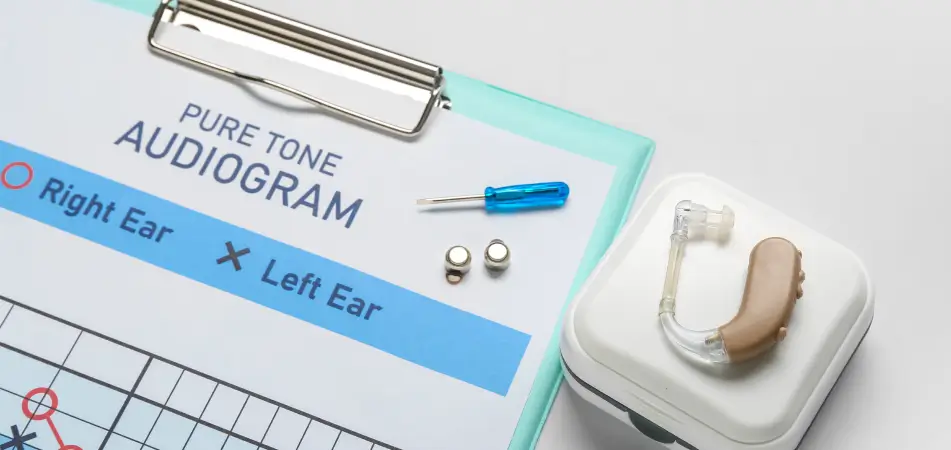
What Does a Hearing Loss Chart Measure?

Hearing loss is typically measured in two ways:
- Volume (Decibels, dB): How loud a sound needs to be for you to hear it.
- Frequency (Pitch): Which tones are difficult for you, often high-pitched sounds like birdsong or children’s voices.
Your results are displayed on an audiogram, a chart that outlines your personal sound profile.
Key Insight: An audiogram helps pinpoint not just if you have hearing loss, but exactly how it affects your daily listening.
Understanding Decibel (dB) Levels
Here’s a quick look at the standard decibel ranges and examples
| Degree of Hearing Loss | Decibel Range (dB) | Example Sounds |
| Normal | 0–25 dB | Whispering, rustling leaves |
| Mild | 26–40 dB | Soft speech, refrigerator hum |
| Moderate | 41–55 dB | Regular speech, air conditioning unit |
| Moderately Severe | 56–70 dB | City traffic, loud conversation |
| Severe | 71–90 dB | Shouting, vacuum cleaner |
| Profound | 91+ dB | Airplane engines, rock concerts |
Key Insight: The higher the dB level, the greater the impact on speech clarity – and the more support you’ll need from devices or strategies.
The Five Degrees of Hearing Loss Explained
- Mild (26–40 dB): Soft speech becomes difficult, especially in noisy spaces.
- Moderate (41–55 dB): Conversations may sound muffled; group settings feel challenging.
- Moderately Severe (56–70 dB): Even quiet environments become difficult for understanding speech.
- Severe (71–90 dB): Speech is nearly impossible to follow without amplification.
- Profound (91+ dB): Everyday sounds are inaudible without advanced hearing aids or assistive devices.
Key Insight: Each degree of hearing loss calls for different technology – from discreet rechargeable aids for mild loss to powerful behind-the-ear models for profound cases.

How Hearing Loss Impacts Daily Life

Hearing loss affects more than just sound. Depending on your chart:
- Conversations may feel exhausting, leading to social withdrawal.
- You may rely heavily on lip reading or subtitles.
- Important alerts (doorbells, alarms, timers) may go unnoticed.
Key Insight: Treating hearing loss early prevents added strain on your brain, memory, and relationships.
Treatment Options for Different Levels
At Hearwell Services, we offer:
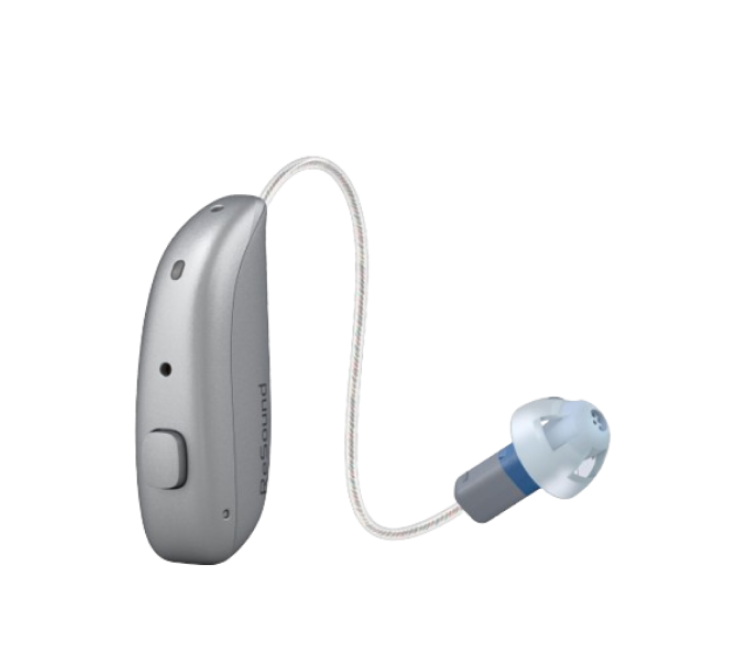
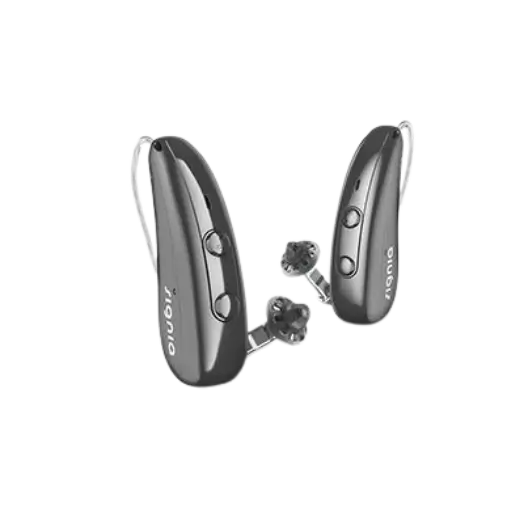
- Custom-fit hearing aids (Phonak, ReSound, Starkey, Widex, Signia) programmed to your audiogram.
- Rechargeable & Bluetooth models for daily convenience.
- In-home fittings and virtual care for maximum comfort and accessibility.
Key Insight: The best hearing aids use smart sound processing to enhance speech and maintain natural balance. This personalized approach helps you hear clearly in every setting.


Reviews

“Hearwell explained my chart in plain language an fitted me with hearing aids that made an instant difference.”

– Anthony R

“The in-home test was so convenient. My dad finally understands what his audiogram means and how his devices help.”
– Karen S
Expert Audiology Care in NY & CT
📍 Amityville, NY | (332) 238-1028
📍 Stamford, CT | (332) 238-1028
📍 Midtown East NYC | (332) 238-1028
📍 Bronx, NY | (332) 238-1028
📍 Hartford, CT | (332) 238-1028

FAQ
How accurate is a hearing loss chart?
Very accurate – when performed by a licensed audiologist. At Hearwell, we use advanced audiometry tools and explain results clearly so you know exactly what your audiogram shows. Many patients find it reassuring when we connect the chart to real sounds in their life – from soft whispers to city traffic. Book a hearing test to see your personal sound profile.
Can mild hearing loss really affect daily life?
Yes. Even a mild loss can make conversations harder in restaurants, family gatherings, or meetings. You may notice more listening fatigue or find yourself leaning in to catch words. Early treatment with custom hearing aids can restore clarity and help you enjoy social settings without strain.
What hearing aids work best for severe loss?
Behind-the-ear models from Phonak, Signia, and Widex often provide the most power for patients with significant hearing loss. These devices are designed for speech clarity, even in noisy settings. During an in-home appointment, we’ll test different models so you can feel the difference before making a choice.
How often should I retest my hearing?
Once a year is recommended, especially if you already use hearing aids or are over 50. Regular hearing aid checkups keep your devices aligned to your current needs and help us catch small changes before they become major challenges. Patients often say these visits give them peace of mind.
Does insurance cover hearing aids?
In many cases, yes. Hearwell partners with Medicare, AARP, UnitedHealthcare, and other major plans. We’ll verify coverage for you and explain payment options clearly. Even without insurance, our pricing is 30% lower than most providers – and we offer insurance and payment plans to make care affordable.

Dr. Jessica M. Frankel, Au.D., CCC-A, FAAA
Co-Founder | Hearwell Services